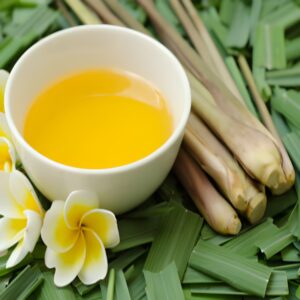
Ginger Grass Oil
Extracted from Cymbopogon martinii (sofia) leaves; energizing, circulation-enhancing, and anti-inflammatory.
-
Aroma & Appearance: Sharp green scent with pepper and lemon undertones; yellow to light brown liquid
-
Extraction: Steam distillation of leaves
-
Key Benefits:
-
Relieves anxiety, tension, headaches, and fatigue
-
Improves blood circulation and calms the mind
-
-
Uses: Aromatherapy, massage oils, baths, topical application for muscle relief
-
Precautions: None specified
Description
It is a perennial growing herbaceous plant having long slender stems with terminal flowering tops. The grass is the source of oil and is very fragrant.
Technical Details
 |
Botanical Name | : | Cymbopogon martinii (sofia) |
|
Common Name | : | Ginger grass essential oil |
|
CAS # | : | 8023-92-5 |
|
Plant Parts Used | : | Leaves |
|
Extraction Method | : | Steam Distillation method |
|
Color & Odor | : | Yellow to light brown liquid with a sharp, green scent with pepper and lemon undertones odor |
Constituents & Specifications
Geraniol, farnesol, geranyl acetate, methylheptenone, citronellol, citral, dipentene and limonene.
Specific Gravity : 0.9100 – 1. 0100 @ 20 °C
Refractive Index : 1.4880 – 1.4940 @ 20 °C
Properties
Gingergrass oil is analgesic, anti-emetic, antiseptic, antispasmodic, bactericidal, carminative, cephalic, expectorant, febrifuge, laxative, rubefacient, stimulant, stomachic, sudorific and tonic.
Benefits & Uses
- Provide relief from anxiety, tension, and headaches; while energizing property fights fatigue and provides revitalization. It strengthen mood when feeling low or stressed out.
- Gingergrass essential oil improves blood circulation and provides calmness.
- Gingergrass oil very effectively treats cold, cough, sinusitis, and throat allergies.
- In addition to this, ginger grass oil is the perfect treatment of sore muscles, inflammation, muscle or joint pains etc.
- Used in the treatment of sore muscles, inflammation, muscle or joint pains etc.