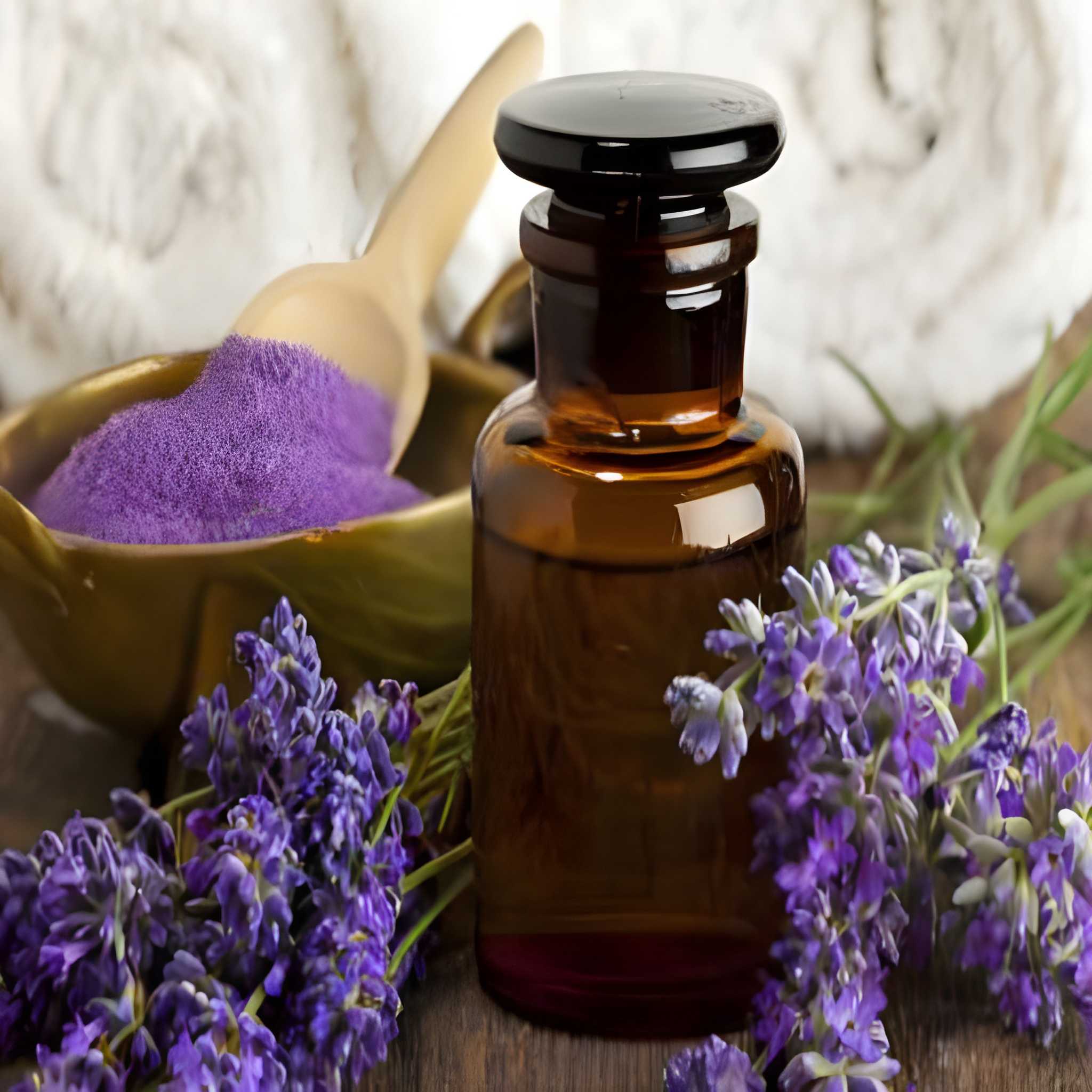
Lavender Oil
Extracted from Lavandula officinalis (Garden Lavender).
-
Aroma & Appearance: Sweet, floral, herbaceous; pale yellow to blue-tinged oil
-
Plant Parts Used: Flowers
-
Extraction: Steam distillation
-
Key Benefits:
-
Antioxidant, antiseptic, antifungal, anti-inflammatory, digestive, diuretic, antidepressant
-
Supports nervous system: reduces depression, headache, hypertension, insomnia, migraine, nervous tension, and stress
-
-
Uses: Inhalation, baths, room sprays, massage, skin and hair care, perfumery
Description
Lavender Oil is derived from Lavender, which is an evergreen woody shrub that has pale green, narrow linear leaves & violet blue flowers.
Technical Details
 |
Botanical Name | : | Lavandula Officinalis |
|
Common Name | : | Garden oil |
|
CAS # | : | 8000-28-0, F.E.M.A. : 2622 |
|
Plant Parts Used | : | Flowers |
|
Extraction Method | : | Steam Distillation |
Constituents & Specifications
Specific Gravity : 0.87500 – 0.88800 @ 25 °C
Refractive Index : 1.45900 – 1.46900 @ 20 °C
Properties
Anti oxident, anti septic, anti fungal, anti-inflammatory, digestive, diuretic, anti depressant. Helpful for nervous system disorders such as depression, headache, hypertension, insomnia, migraine, nervous tension, stress related conditions.
Benefits & Uses
- Lavender oil soothes nervous exhaustion. It is mostly used for inhalation, bath , room spray and massage.
- Used to treating asthma, colds, halitosis, laryngitis, throat infections & whooping cough. Further, it also helps digestive system deal with colic, nausea, vomiting & flatulence
- It is also used in facial pack, shampoo, hair conditioners and ladies perfume for it’s sweet odour.
YOU MAY ALSO LIKE
[slide-anything id=’31’]