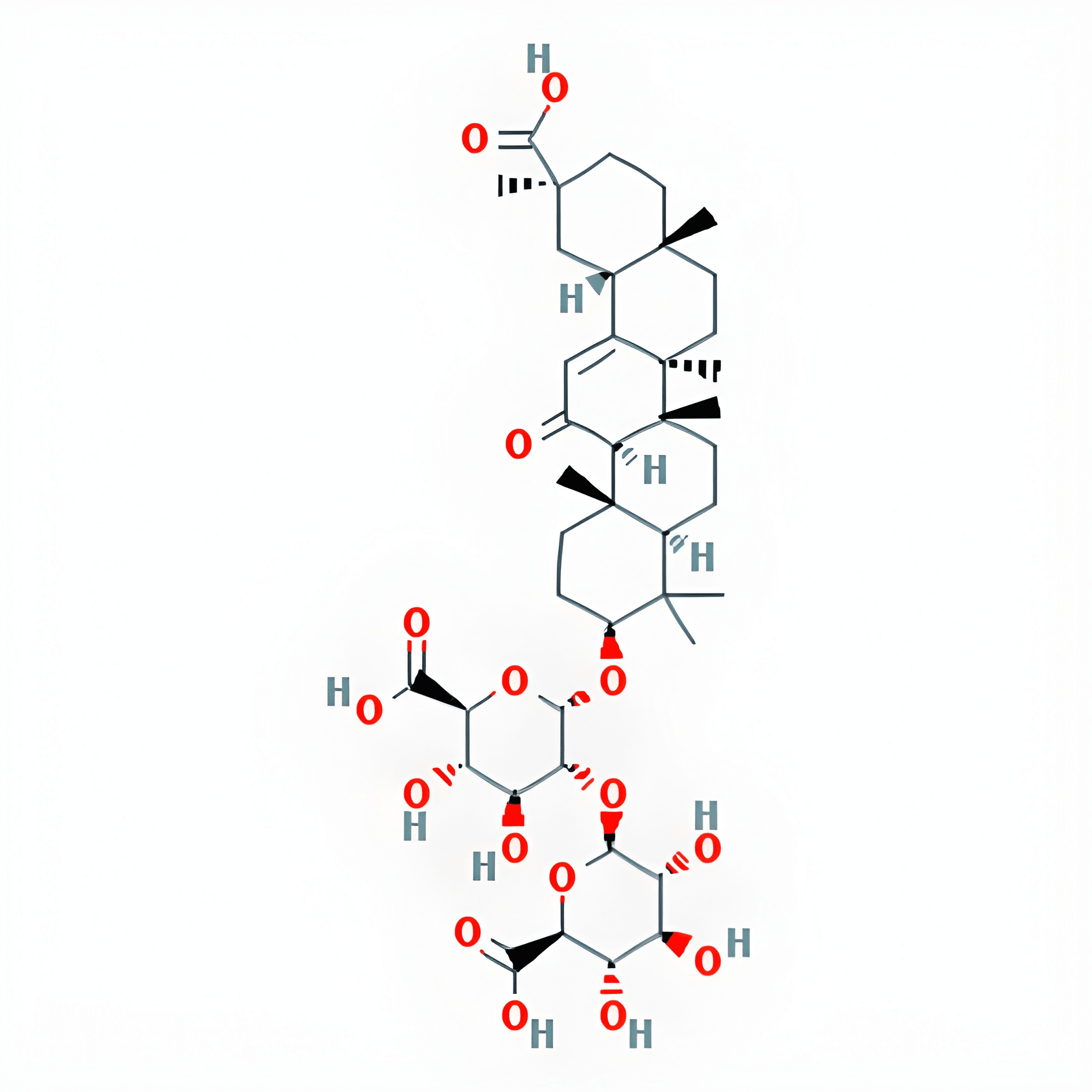
Glycyrrhitinic Acid
Glycyrrhizic Acid (Glycyrrhizin) is a triterpenoid saponin extracted from licorice root (Glycyrrhiza glabra). It is valued for its sweetening properties, anti-inflammatory, antiviral, and hepatoprotective effects, making it widely used in pharmaceuticals, food, and cosmetic formulations.
- Molecular Formula: C42H62O16
- Molecular Weight: 822.94 g/mol
High-purity Glycyrrhizic Acid is supplied for research, industrial, and formulation purposes.
Description
Glycyrrhizic Acid, also known as Glycyrrhizin or Glycyrrhetinic acid glycoside, is a natural triterpenoid saponin obtained from licorice root. It is widely used for its sweetening, anti-inflammatory, antiviral, and hepatoprotective properties in pharmaceutical, nutraceutical, and cosmetic applications.
Chemical Information
- Chemical Names: Glycyrrhizic acid; Glycyrrhizin; Glycyrrhizinic acid; Glycyron; Glycyrrhetinic acid glycoside
- CAS Number: 1405-86-3
- Molecular Formula: C42H62O16
- Molecular Weight: 822.94 g/mol
- InChI Key: LPLVUJXQOOQHMX-QWBHMCJMSA-N
Applications
- Used as a natural sweetener and flavor enhancer
- Pharmaceutical applications for liver protection, anti-inflammatory, and antiviral formulations
- Cosmetic formulations for soothing and anti-aging effects
- Research on saponins and bioactive compounds from licorice
Handling & Storage
Store in a cool, dry, well-ventilated place, away from light and moisture. Keep containers tightly closed to maintain purity and stability.
Regulatory & Usage Information
For research, industrial, and formulation use only. Certificates of Analysis and technical support are available upon request.
Click Request a Quote for pricing, availability, and documentation.