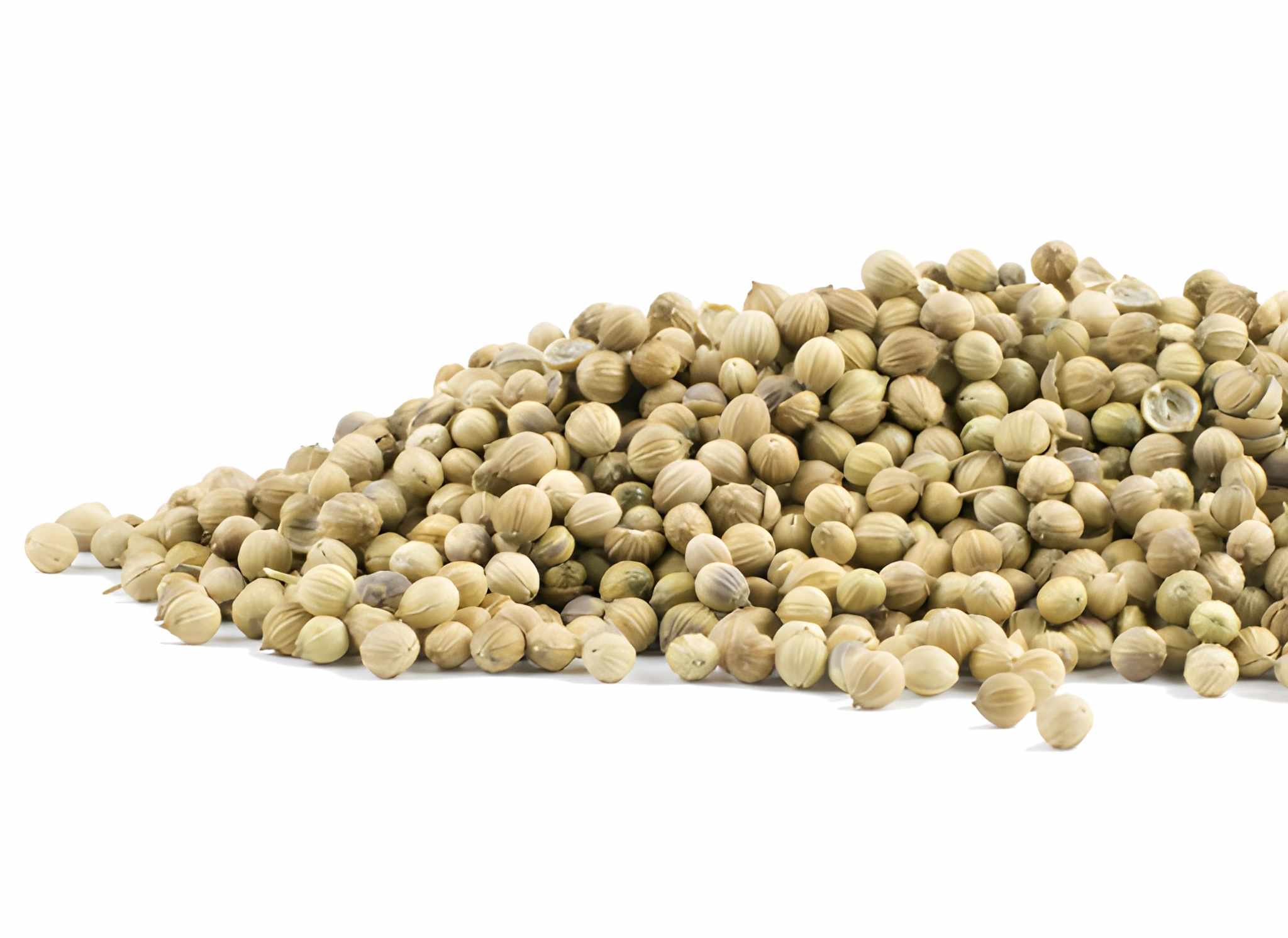
Coriander Seed
Coriander Seed is the dried ripe fruit of Coriandrum sativum, widely used as a spice and flavoring agent in culinary, beverage, and traditional herbal formulations. It is valued for its warm, citrusy aroma and long history of use across global cuisines.
- Botanical Name: Coriandrum sativum L.
- Plant Family: Apiaceae
- Plant Part Used: Dried fruit (seed)
Suitable for food, beverage, herbal, and flavoring applications.
Description
Coriander Seed is obtained from the dried ripe spherical fruits of Coriandrum sativum, a hardy annual herb belonging to the Apiaceae family. While the fresh leaves are commonly known as cilantro, the dried fruits are referred to as coriander seeds and are widely used as a spice.
Coriander is one of the world’s oldest cultivated spices, with documented use spanning thousands of years across the Mediterranean, Asia, and the Middle East. The seeds are prized for their warm, slightly sweet, citrus-like aroma and are used extensively in both traditional cuisines and botanical preparations.
Botanical Information
- Botanical Name: Coriandrum sativum L.
- Family: Apiaceae
- Common Names: Coriander (fruit), Cilantro (leaf)
- Other Names: Chinese parsley, Yuan Sui Zi
Origin & Cultivation
Coriander is native to the Mediterranean region and parts of Asia and is now cultivated worldwide. Major producers include India, Ukraine, Russia, Morocco, Argentina, Canada, Mexico, and Romania. India is both a leading producer and consumer, with much of its crop used domestically.
Plant Description
The plant features rounded, lobed lower leaves and finely divided upper leaves. Small white umbel-shaped flowers are characteristic of the Apiaceae family. All parts of the plant are utilized, though the leaves (cilantro) and fruits (coriander seeds) are the most commonly used.
Key Constituents
- Essential oils (including linalool)
- Terpenes and aromatic compounds
- Natural fatty oils
Traditional Uses & Properties
Traditionally, coriander seed has been used to support digestion and improve the flavor of foods that are otherwise difficult to digest. It has also been widely used as a flavoring agent in alcoholic beverages, including gin, beers, and herbal liqueurs.
In many traditional systems, coriander is valued for its aromatic, carminative, and balancing qualities. It has been used across Ayurvedic, Chinese, and Western herbal traditions for centuries.
Applications
- Culinary spice for curries, soups, sauces, meats, and pickles
- Flavoring agent in liquors, beers, and spirits
- Spice blends and curry powders
- Herbal teas and traditional formulations
- Extraction of coriander essential oil
Flavor Profile
- Warm, citrusy, slightly sweet
- Bitter and pungent undertones
Handling & Storage
Store in a cool, dry place away from heat, light, and moisture. Whole seeds retain aroma longer than ground material. Handle using standard food or botanical industry practices.
Precautions
Specific: No known precautions when used as intended.
General: Consult a qualified healthcare practitioner before using herbal products, especially if pregnant, nursing, or taking medications.
Regulatory & Usage Information
For industrial, formulation, and research use. Certificates of Analysis (CoA), technical documentation, and bulk supply options are available upon request.