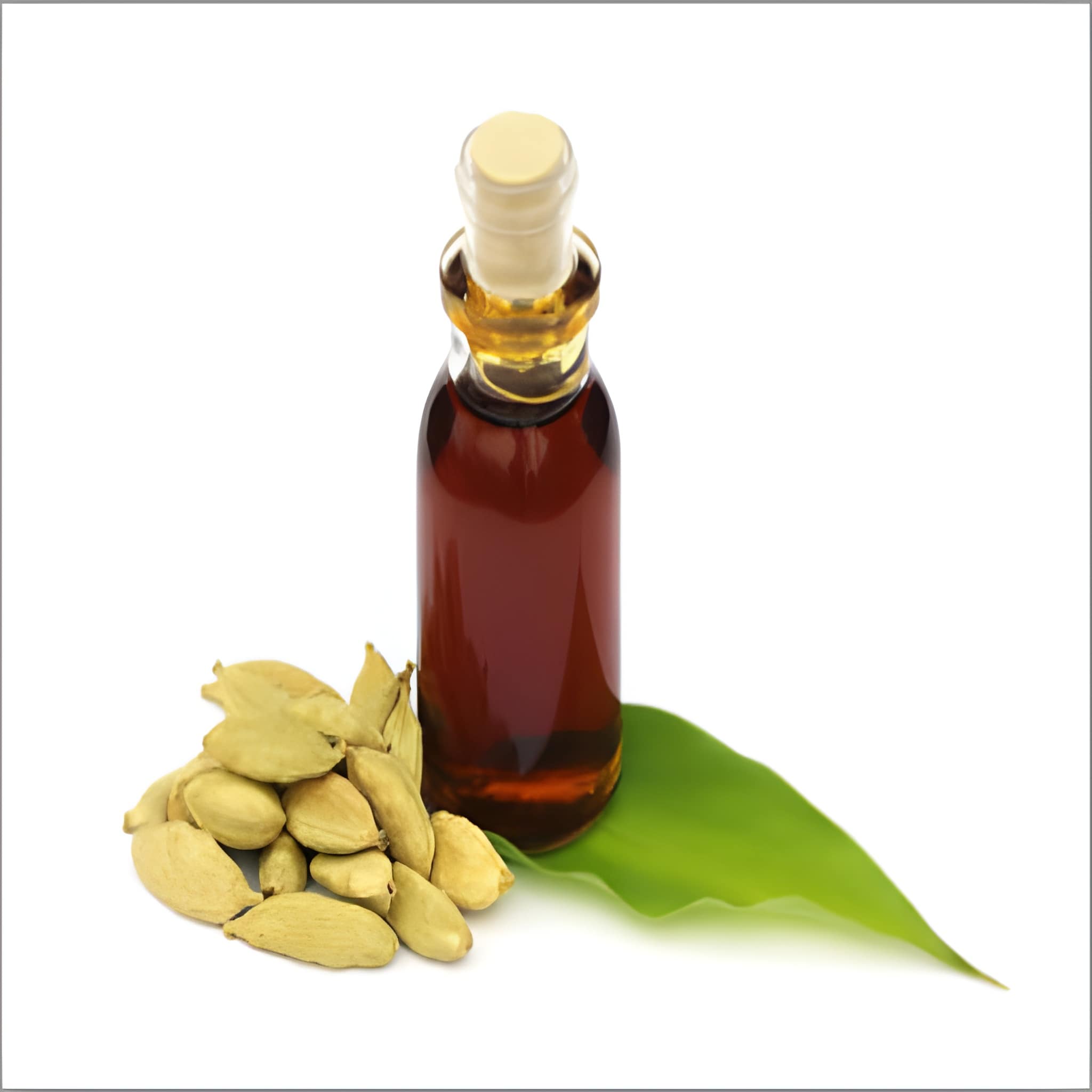
Cardamom Oil
Cardamom Oil
Cardamom Oil is a warm, sweet, and spicy essential oil prized for its digestive and respiratory benefits. Steam-distilled from the seeds of Elettaria cardamomum, it has a refreshing, uplifting aroma and is widely used in aromatherapy, massage blends, and natural wellness formulations.
Botanical Name: Elettaria cardamomum
Plant Family: Zingiberaceae
Common Names: Cardamom, Cardamomi, Cardomum, Mysore Cardamom
Ideal for use in aromatherapy, massage oils, and natural health formulations.
Description
Cardamom Oil (Elettaria cardamomum) is a highly aromatic essential oil obtained from the seeds of the cardamom fruit. Known for its sweet, spicy, and slightly balsamic fragrance, this oil has been valued for centuries in traditional medicine systems, perfumery, and culinary cultures. It is especially regarded for its digestive, stimulant, and expectorant properties.
The oil is clear to pale yellow in color with a light, watery viscosity, making it ideal for blending in aromatherapy and topical applications when properly diluted.
Cultivation & Harvesting
-
Native to India and Sri Lanka
-
Cultivated throughout tropical regions
-
Seeds harvested just before ripening for optimal oil yield
-
Oil yield ranges from 1–5%
Botany
-
Perennial, reed-like herb reaching up to 4 meters in height
-
Long green leaves, yellowish flowers with violet tips
-
Produces oblong gray fruits containing aromatic seeds
-
Member of the Zingiberaceae (ginger) family
Aroma & Characteristics
-
Aroma: Sweet, spicy, warm, slightly balsamic
-
Color: Clear to pale yellow
-
Viscosity: Thin to watery
Chemical Composition
Key constituents include α-pinene, β-pinene, sabinene, myrcene, limonene, 1,8-cineole, γ-terpinene, p-cymene, linalool, linalyl acetate, terpinen-4-ol, α-terpineol, citronellol, nerol, geraniol, methyl eugenol, and trans-nerolidol.
Therapeutic Properties
Antiseptic, antispasmodic, carminative, digestive, diuretic, expectorant, stimulant, stomachic, tonic, and cephalic.
Uses & Preparations
-
Used in aromatherapy to support digestion, mental clarity, and fatigue
-
Included in massage oils to warm and stimulate the body
-
Beneficial in vapor therapy for coughs and respiratory support
-
Commonly used as a general tonic in wellness formulations
History & Traditional Use
Cardamom has been used since ancient times by Egyptian, Roman, and Arab cultures. Egyptians incorporated it into perfumes and oral hygiene, Romans used it to ease digestion, and Arabs traditionally added it to coffee. The essential oil was first distilled in 1544 by Valerius Cordus following European exploration of the East.
Precautions
Non-toxic, non-irritant, and non-sensitizing when used as directed.
For external use only. Always dilute before topical application.
Consult a qualified healthcare practitioner before use during pregnancy or if under medical supervision.