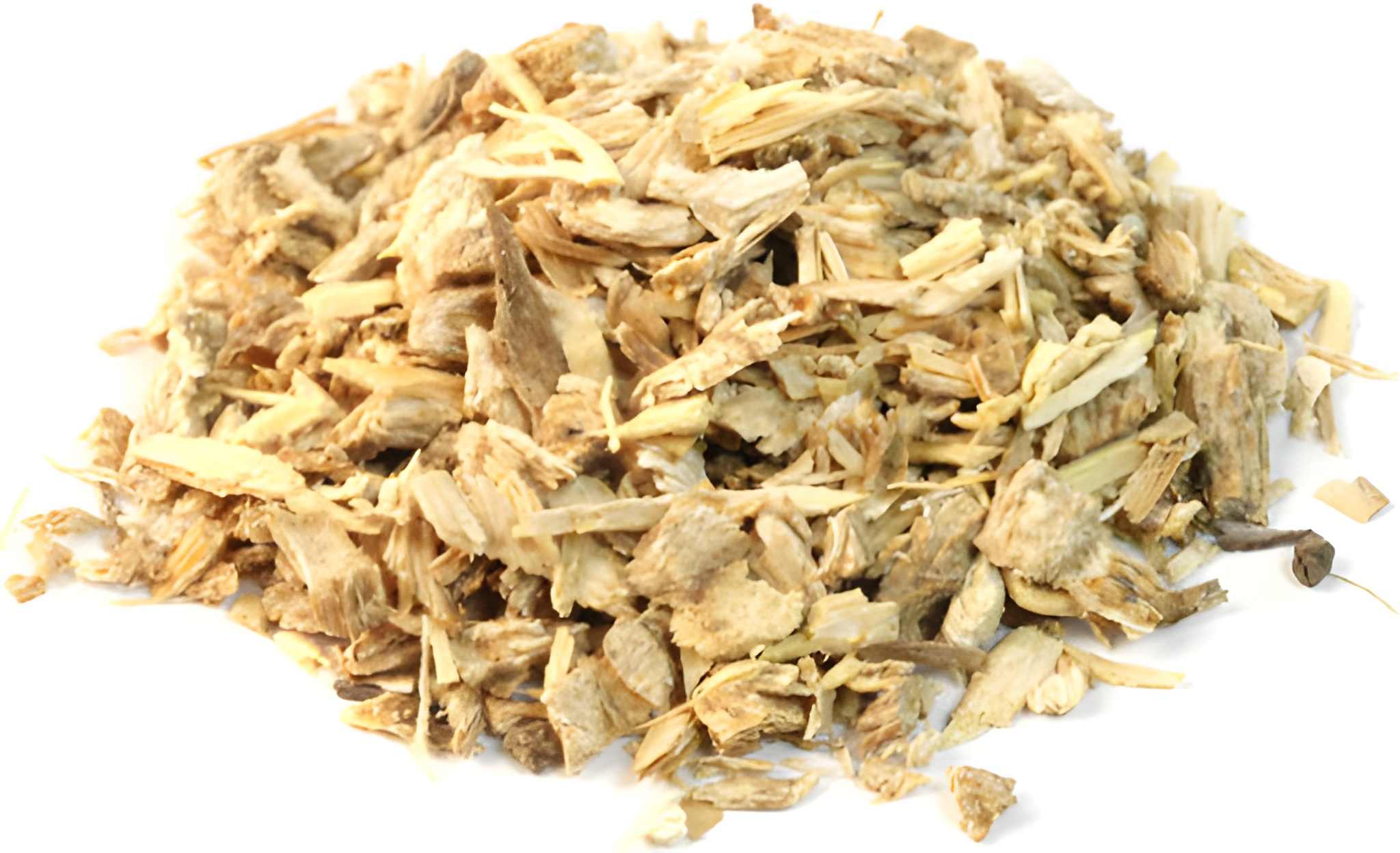
Angelica Root
Angelica Root is a traditional herbal ingredient obtained from Angelica archangelica. It has been used for centuries in European herbal practices, particularly for digestive and warming formulations, as well as in flavoring applications.
- Botanical Name: Angelica archangelica
- Plant Part Used: Root
Suitable for herbal preparations, traditional formulations, and flavoring applications.
Description
Angelica Root is derived from the plant Angelica archangelica, a biennial or short-lived perennial belonging to the Apiaceae family, which also includes celery, carrot, and parsley. The plant is native to Northern and Central Europe, Scandinavia, Iceland, Greenland, and parts of North Asia, where it thrives in damp, cool environments.
The root is thick, fleshy, and branched, containing a complex profile of volatile oils, bitter compounds, and organic acids. Angelica has a long history of use as both a medicinal plant and food source, especially among Nordic cultures, including the Sami people and Inuit communities. It was highly valued by Vikings and was legally protected in parts of Scandinavia due to its importance.
Botanical Information
- Botanical Name: Angelica archangelica
- Family: Apiaceae
- Common Names: European angelica, garden angelica, wild parsnip, holy ghost, masterwort, wild celery
- Plant Type: Biennial / short-lived perennial
Key Constituents
- Volatile oils (including phellandrene and terpenes)
- Coumarins and coumarin derivatives (such as osthol, angelicin, archangelicin)
- Bitter substances
- Sugars (glucose, sucrose, saccharine)
- Organic acids (aconitic, fumaric, oxalic acids)
Traditional Uses & Properties
Traditionally, Angelica Root has been regarded as a warming and invigorating herb. In European herbal traditions, it has primarily been used in formulations associated with digestive comfort and general vitality. During the Middle Ages, it was one of the most respected medicinal plants and was widely cultivated and traded across Europe.
Applications
- Herbal and traditional formulations
- Digestive and warming herbal blends
- Flavoring agent in liqueurs and spirits
- Functional and botanical product development
Additional Information
The stems of the Angelica plant are edible and have historically been consumed as a vegetable similar to celery. The root and other plant parts have also been used for centuries as flavoring agents, notably in classic herbal liqueurs such as Bénédictine and Chartreuse.
Handling & Storage
Store in a cool, dry place away from direct light and moisture. Handle using standard industry practices.
Regulatory & Usage Information
For industrial, formulation, and research use. Documentation such as Certificates of Analysis (CoA) and bulk supply options are available upon request.