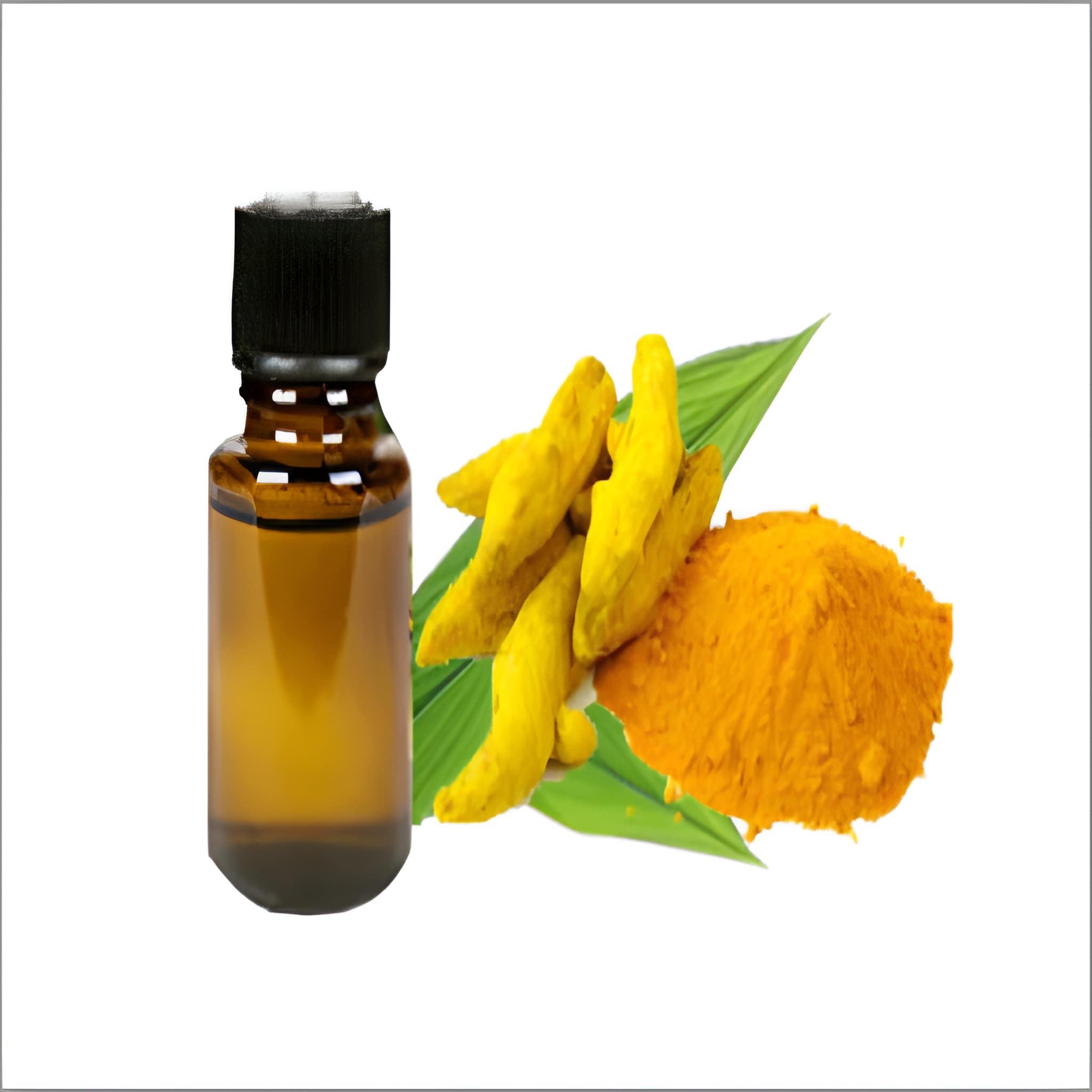
Turmeric Leaf Oil
Extracted from Curcuma longa leaves; valued for antiseptic, anti-inflammatory, and skin-benefiting properties.
-
Aroma & Appearance: Spicy, earthy, warm; yellow to slightly yellow-green, thin liquid
-
Extraction: Steam distillation of leaves
-
Key Benefits:
-
Natural antiseptic and antibacterial
-
Anti-inflammatory, analgesic, anti-arthritic
-
-
Uses: Aromatherapy, massage oils, skin care formulations, food flavoring and coloring
-
Precautions: None specified
Description
Turmeric is a perennial plant with roots or tubers about 1 metre in height. Indian turmeric is considered the best in the world.
Technical Details
 |
Botanical Name | : | Curcuma longa |
|
Common Name | : | Curcuma longa l. leaf oil |
|
CAS # | : | 84775-52-0 |
|
Plant Parts Used | : | Leaves |
|
Extraction Method | : | Steam Distillation |
|
Color & Odor | : | Yellow to slightly yellow green thin liquid with spicy, earthy, warm odor |
Constituents & Specifications
Turmeric leaf oil has various chemical compounds that include phellandrene, limonene, zingiberene, curcumene, turmerone, turmerone, turmerone and cineole.
Properties
It is natural antiseptic. aphrodisiac, analgesic, anti-arthritic, anti-inflammatory, anti-oxidant, anti-tumoral, bactericidal, diuretic, hypotensive, insecticidal, laxative, rubefacient and digestive stimulant
Benefits & Uses
- Turmeric leaf essential oil is viewed as a strong relaxant and balancer. It also has historical applications as an antiseptic and for skin care use against acne and facial hair in women. It has a great role in flavorings for food additives.
- It is one of the most important colouring materials of India. The leaf oil yield the orange-red dye. It is much used to impart a yellow colour to cloth.