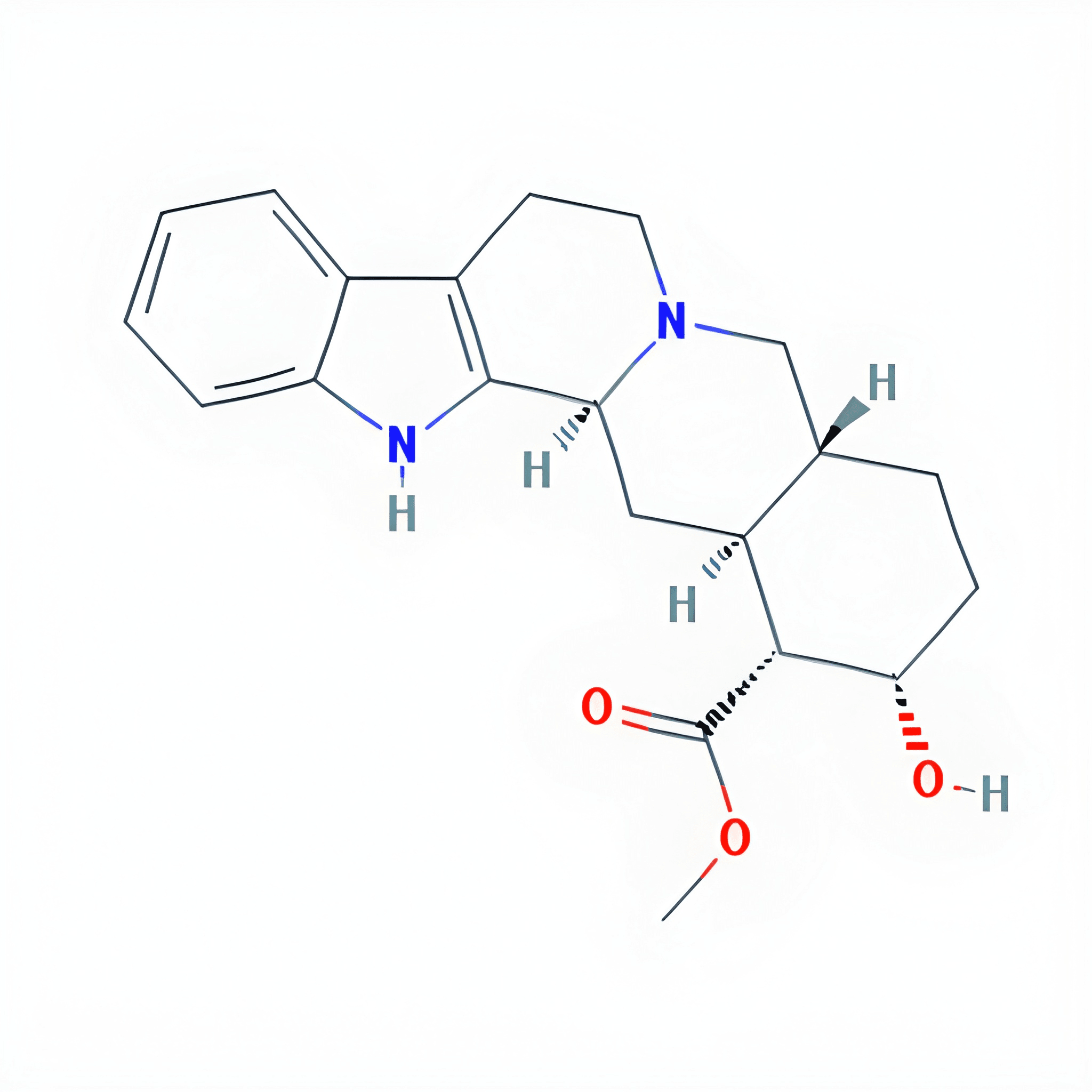
Yohimbine HCL
Yohimbine HCL is the hydrochloride salt form of Yohimbine, an indole alkaloid derived from the bark of Pausinystalia johimbe. It is widely used in research for its potential effects on blood flow, metabolism, and adrenergic receptor modulation.
- Molecular Formula: C21H26N2O3
- Molecular Weight: 354.45 g/mol
Suitable for pharmaceutical research, metabolic studies, and adrenergic receptor investigations.
Description
Yohimbine HCL, also known as Yohimbine, Yohimbin, Quebrachin, Quebrachine, or Corynine, is the hydrochloride salt of the alkaloid extracted from Pausinystalia johimbe bark. It acts as an alpha-2 adrenergic receptor antagonist, making it useful in studies of metabolism, blood flow, and nervous system modulation.
Chemical Information
- Chemical Names: Yohimbine; Yohimbin; Quebrachin; Quebrachine; Corynine; 146-48-5
- Molecular Formula: C21H26N2O3
- Molecular Weight: 354.45 g/mol
- InChI Key: BLGXFZZNTVWLAY-SCYLSFHTSA-N
Applications
- Pharmaceutical and biomedical research
- Adrenergic receptor modulation studies
- Metabolic and cardiovascular research
Handling & Storage
Store in a cool, dry place, protected from light. Follow laboratory safety guidelines when handling due to its bioactive properties.
Regulatory & Usage Information
For research and pharmaceutical use. Certificates of Analysis (CoA) and bulk supply options are available upon request.
Click Request a Quote for pricing, availability, and technical documentation.