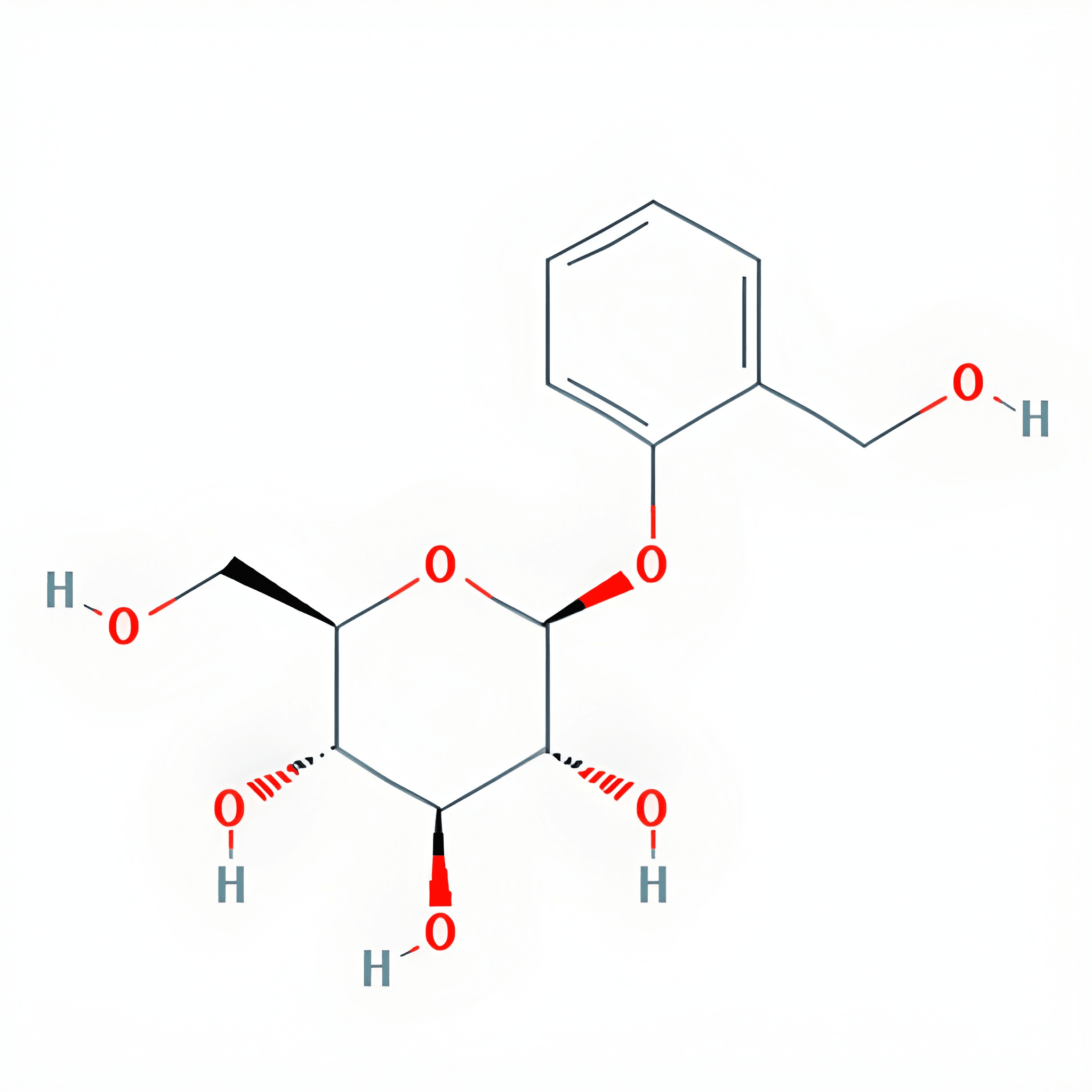
Salicin
Salicin is a naturally occurring glucoside found in willow bark and related plants. It is widely studied for its anti-inflammatory properties and serves as a key precursor in pharmaceutical research and nutraceutical applications.
- Molecular Formula: C13H18O7
- Molecular Weight: 286.28 g/mol
Ideal for pharmaceutical research, functional health formulations, and biochemical studies.
Description
Salicin is a bioactive glucoside primarily extracted from willow bark (Salix species) and other medicinal plants. Known for its role as a natural anti-inflammatory agent, it is a key compound in pharmacology research and is historically significant as a precursor to salicylic acid derivatives.
Salicin is widely used in pharmaceutical research, nutraceutical development, and functional health studies. Its potential for modulating inflammation and supporting joint and cardiovascular health makes it valuable in both experimental and applied research settings.
Chemical Information
- Chemical Names: Salicin; 138-52-3; Salicoside; Salicine; Salicyl alcohol glucoside; (2R,3S,4S,5R,6S)-2-(Hydroxymethyl)-6-(2-(hydroxymethyl)phenoxy)tetrahydro-2H-pyran-3,4,5-triol
- Molecular Formula: C13H18O7
- Molecular Weight: 286.28 g/mol
- InChI Key: NGFMICBWJRZIBI-UJPOAAIJSA-N
Applications
- Pharmaceutical and medicinal chemistry research
- Anti-inflammatory and functional health studies
- Nutraceutical and dietary supplement formulations
- Plant-based bioactive compound research
Handling & Storage
Store in a cool, dry place, protected from light and moisture. Use standard laboratory or industrial safety precautions.
Regulatory & Usage Information
For research, industrial, and formulation use. Certificates of Analysis (CoA), safety documentation, and bulk supply options are available upon request.
Click Request a Quote for pricing, availability, and technical details.