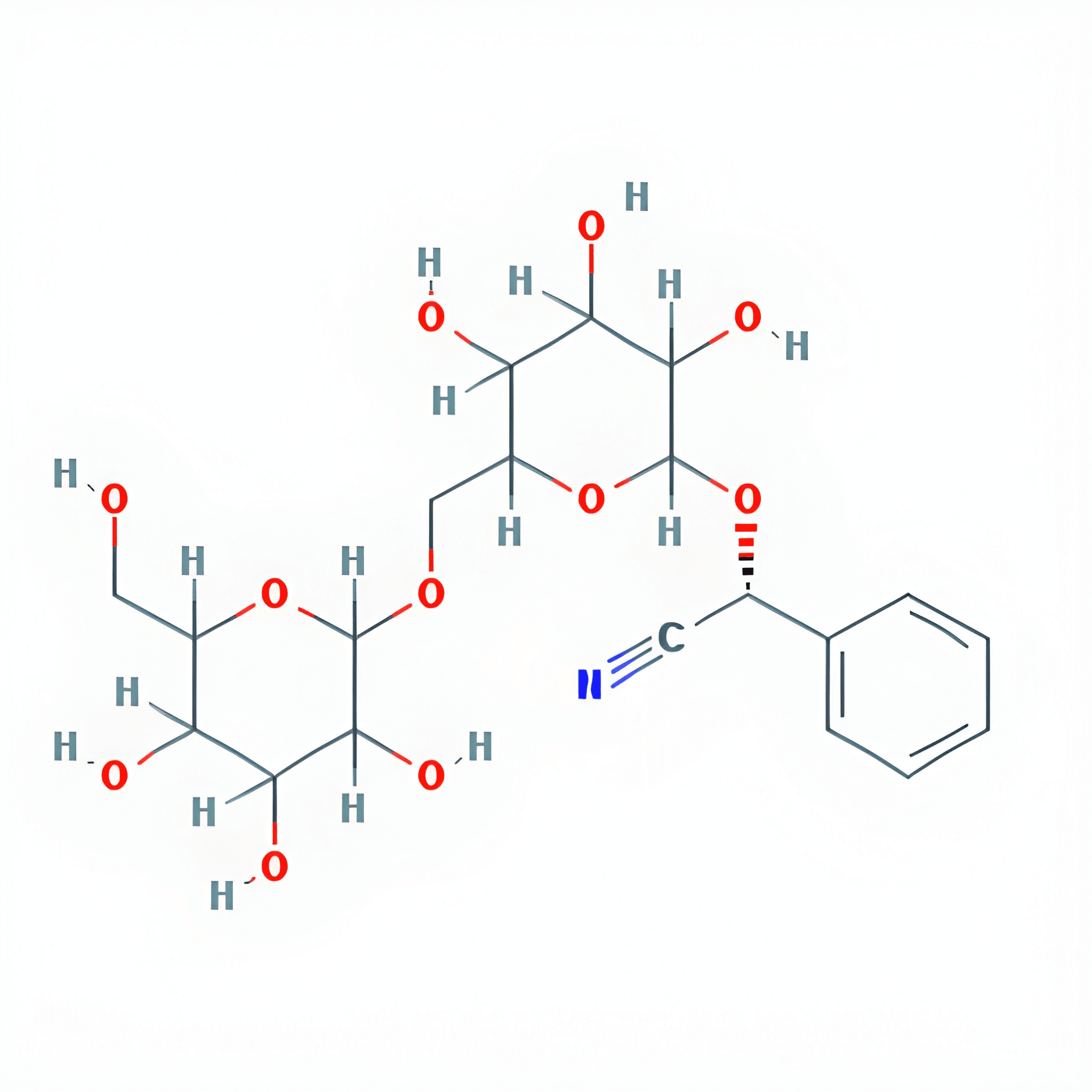
Amygdalin
Amygdalin is a naturally occurring cyanogenic glycoside found in seeds of plants such as bitter almonds, apricots, and peaches. It is widely used in research and chemical studies as a bioactive compound and intermediate.
- Molecular Formula: C20H27NO11
- Molecular Weight: 457.43 g/mol
- CAS No.: 29883-15-6
- Purity: ≥97% (HPLC)
- Grade: Research / Industrial
Supplied for research and industrial use. Available in custom quantities upon request.
Description
Product Description
Amygdalin is a naturally occurring cyanogenic glycoside primarily extracted from seeds of bitter almonds, apricots, and other Prunus species. It has been extensively studied for its chemical properties and bioactivity, making it valuable in pharmaceutical and chemical research.
Amygdalin is used in medicinal chemistry, analytical studies, and industrial research as a bioactive intermediate. Its well-characterized structure, high purity, and reproducible specifications ensure suitability for laboratory and research applications.
Chemical Information
- Molecular Formula: C20H27NO11
- Molecular Weight: 457.43 g/mol
- CAS Number: 29883-15-6
- Synonyms: Amygdalin (no common alternative name)
Specifications
- Purity (HPLC): ≥97% area%
- Purity (Total Nitrogen): ≥93%
- Specific Rotation [α]20/D: -35.0 to -45.0° (C=2, H₂O)
Applications
- Pharmaceutical and medicinal chemistry research
- Analytical and natural product studies
- Chemical intermediate for bioactive compound synthesis
- Industrial research applications
Handling & Storage
Handle using appropriate laboratory safety procedures. Store in a cool, dry place, protected from light and moisture to maintain stability and purity.
Supply & Usage Information
Supplied strictly for research and industrial use. Not intended for direct human or veterinary consumption. Custom quantities and documentation are available upon request.
For pricing, specifications, and bulk supply options, please use the Request a Quote option.